
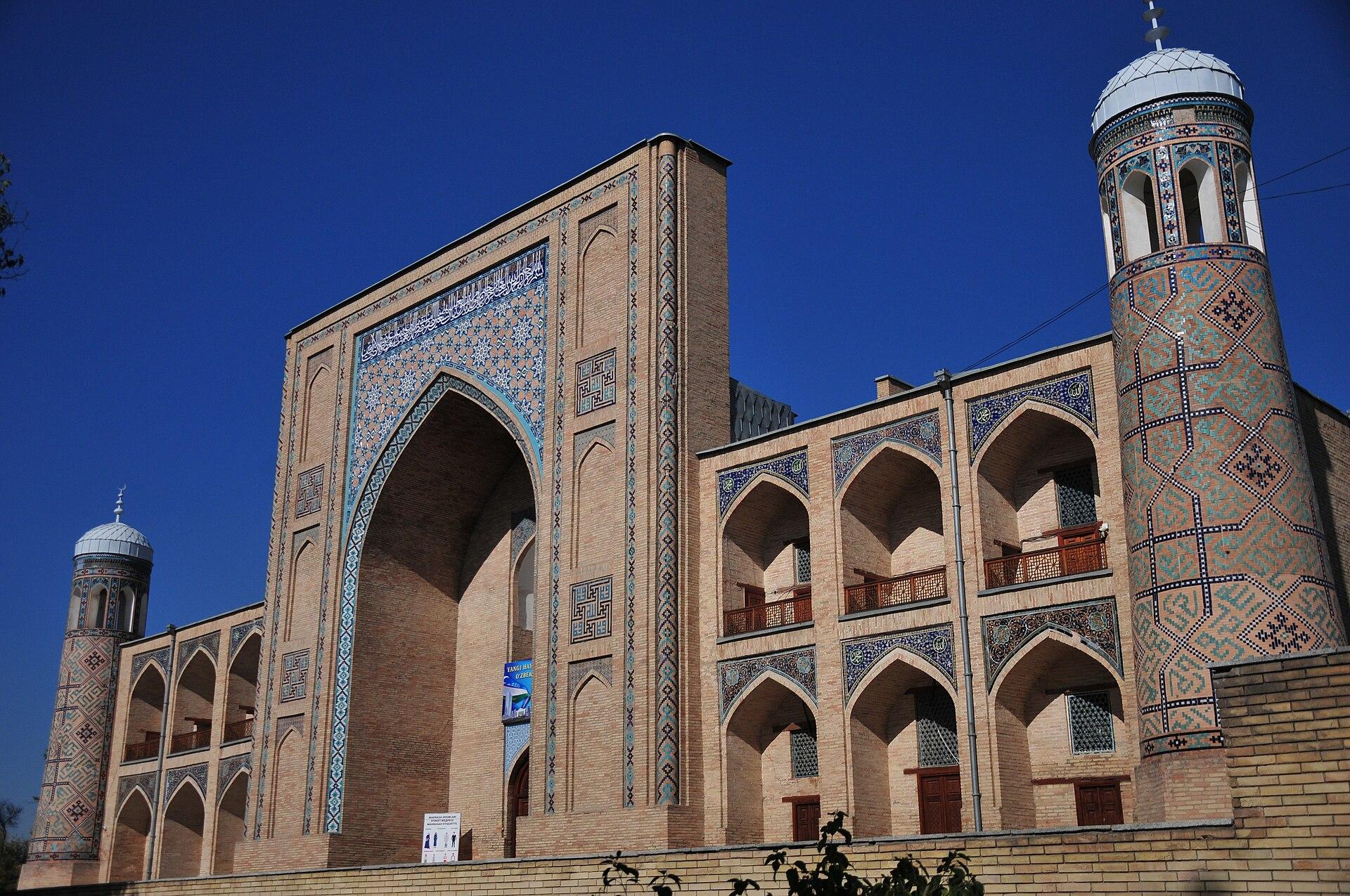
The Kukeldash Madrasah is located on a hill in Chorsu Square and looks majestic even despite its close proximity to taller buildings—the Haji Akhrar Vali Friday Mosque and the recently demolished Chorsu Hotel.
Kukeldash is believed to have been built in 1570 by the khokim Dervish
Khan, who was the foster brother (kukeldash) of the khan himself, a fact
commemorated in its name. Over the centuries, the building has undergone
modifications, being partially dismantled for its bricks and then rebuilt. In
the 18th century, it housed a caravanserai for visiting merchants.
As a result of the earthquakes of 1868 and 1886, the building was
damaged; its majestic portal collapsed, and the structure stood without a
portal for almost a century. In the 1950s, a summer cinema operated in the
remains of the building. The portal was restored in the 1960s, and the minarets
flanking the façade were rebuilt in the 1970s.
The restored Kukeldash is now used for its original purpose—it houses an Islamic secondary school (Kukaldosh, also known as the Islamic school). However, the building remains a top tourist attraction.
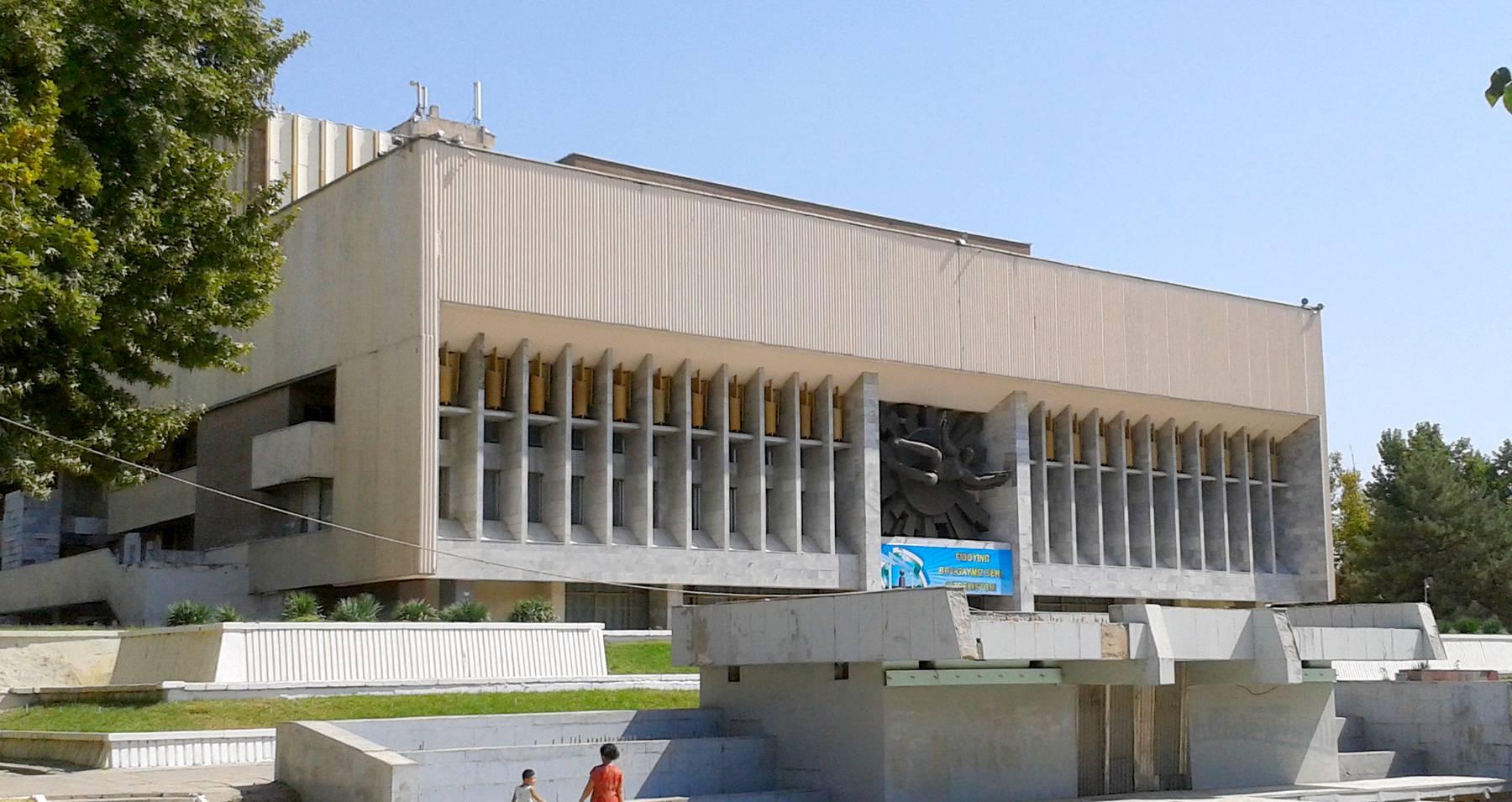
In the aviation builders’ town stands one of Tashkent’s most majestic buildings. Its design was cra...
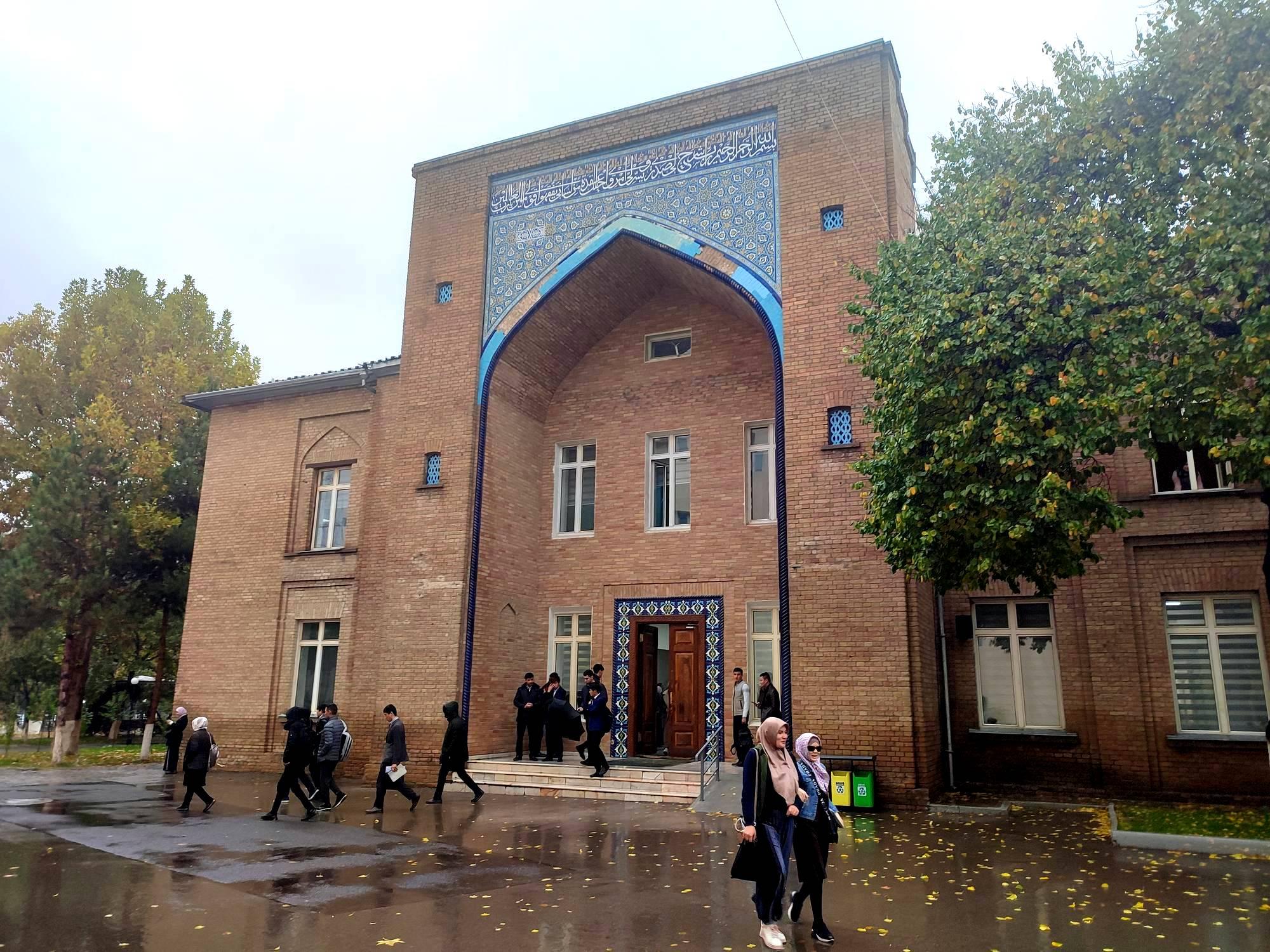
The building was constructed in 1928 for the cooperative technical school, which grew out of the pr...
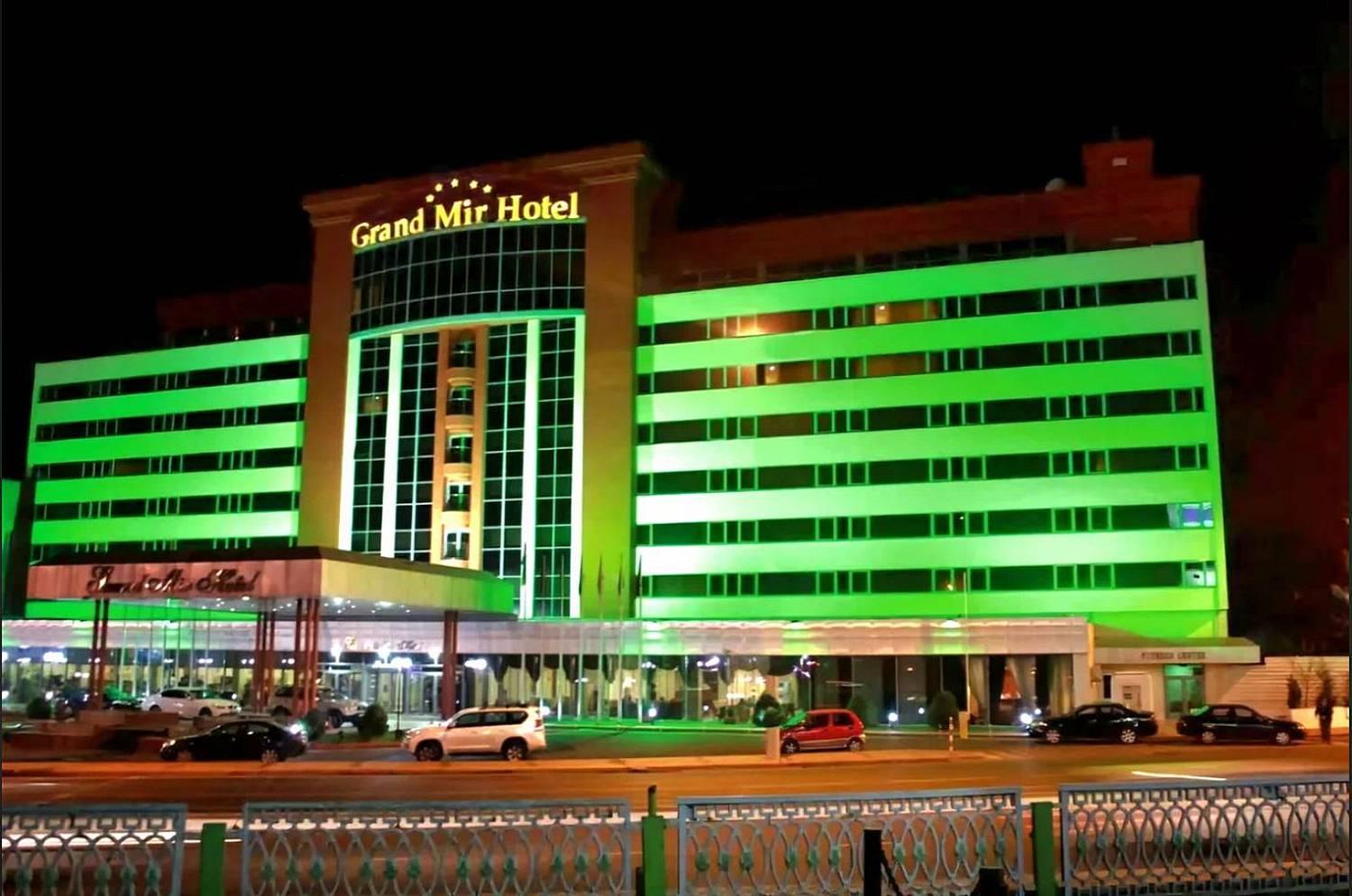
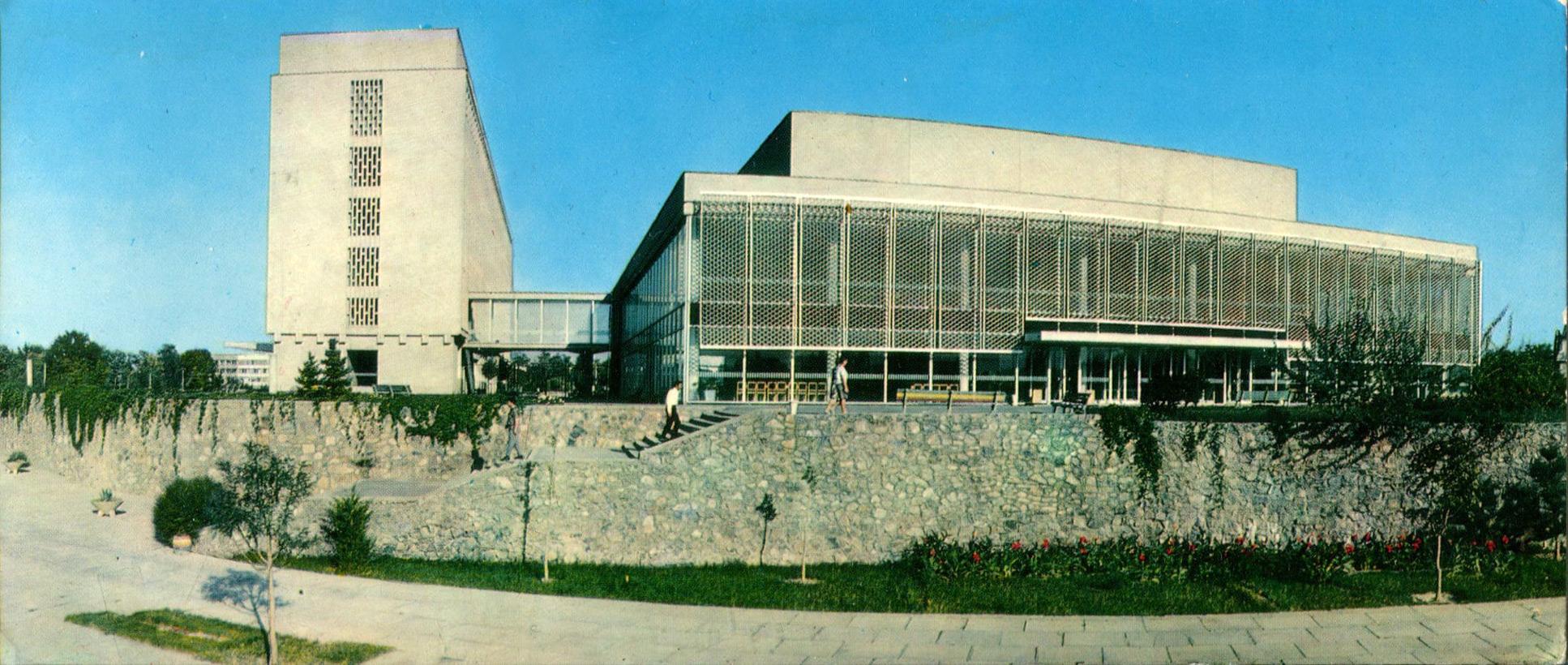
Hotel "Russia" Built in 1965. Architect — V. Muratov; engineers — V. Parshin and A. Ivanova; artis...
The former Central Committee of the Communist Party of Uzbekistan building was constructed in 1964....